
Virtual Pets, IRL Connections:
The Endearing Queerness of
the Toronto Tamagotchi Club
Written and photographed by Asha Swann
“My Tamagotchi has no friends.”
This was the heading of a hand-drawn poster that Twoey Gray shared to social media in 2022 to spread the word that she was hosting a Tamagotchi friending event. She paired it with a photo of herself holding her palm-sized pet.
The iconic virtual pets were first launched in 1996 by Japanese toy company Bandai. Around 10 million units were sold domestically in just the first year of production. By the end of 1997, Tamagotchis were on shelves all over the world — and quickly flying off them. A 1997 news report on CBC’s The National calls Tamagotchis “the biggest craze” amongst kids and teens.
Tamagotchi has gone through many iterations over the years, but the main idea remains the same: your pet needs food, medicine when sick, and attention. The handheld devices have cute graphics, very few buttons, and beeping sounds to alert the user when the pet’s mood or health status changes.
The kids who played with Tamagotchis have grown up, and thanks to a 2017 release, adults in their twenties and thirties are reliving their childhood joys. They’re even finding community through shared nostalgia.
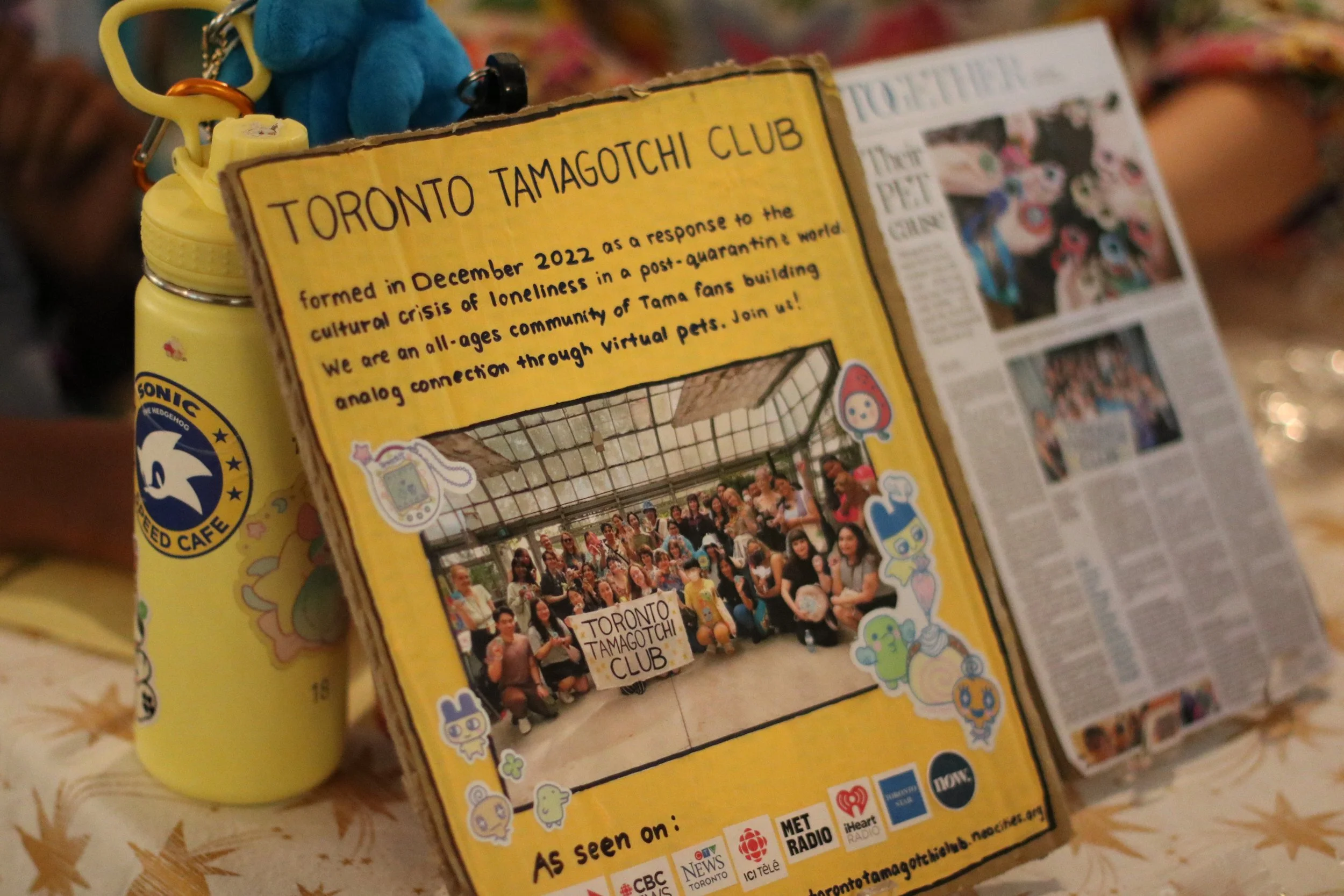
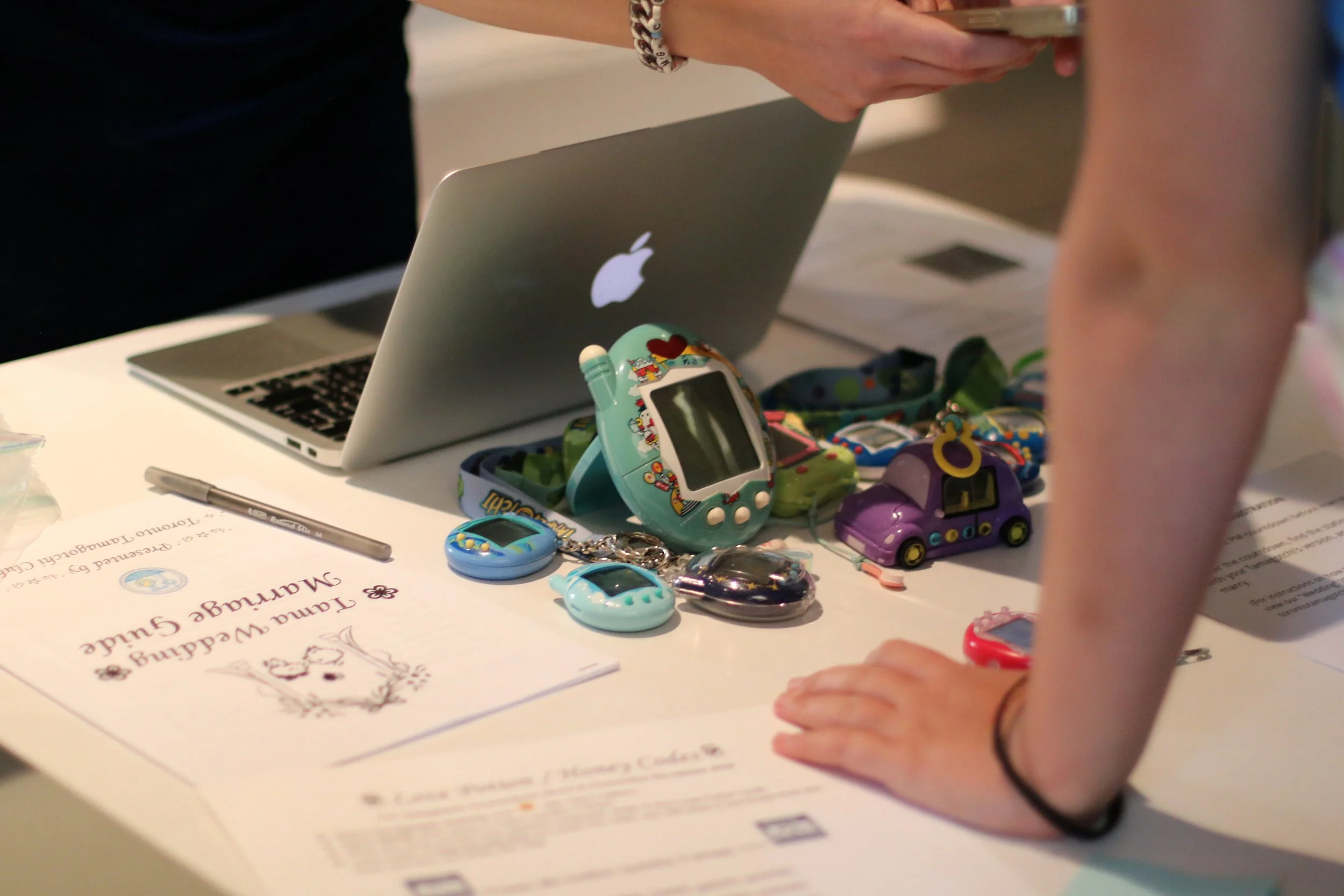
Twoey’s first meetup was with a handful of people at Allan Gardens in Toronto. The meetups quickly gained interest and grew into the Toronto Tamagotchi Club, which now boasts over a hundred members. One recent meetup succeeded in breaking a world record: the largest-ever Tamagotchi wedding. Attendees were predominantly from Ontario, but some travelled internationally, including from the U.S. and Trinidad, to take part in the event.
A love for virtual pets isn’t the only thing these club members have in common — the community also happens to be very queer, despite the club never being marketed in this way. Members wear rainbow buttons and patches, queer couples hold hands freely, and gender expression comes in many forms.
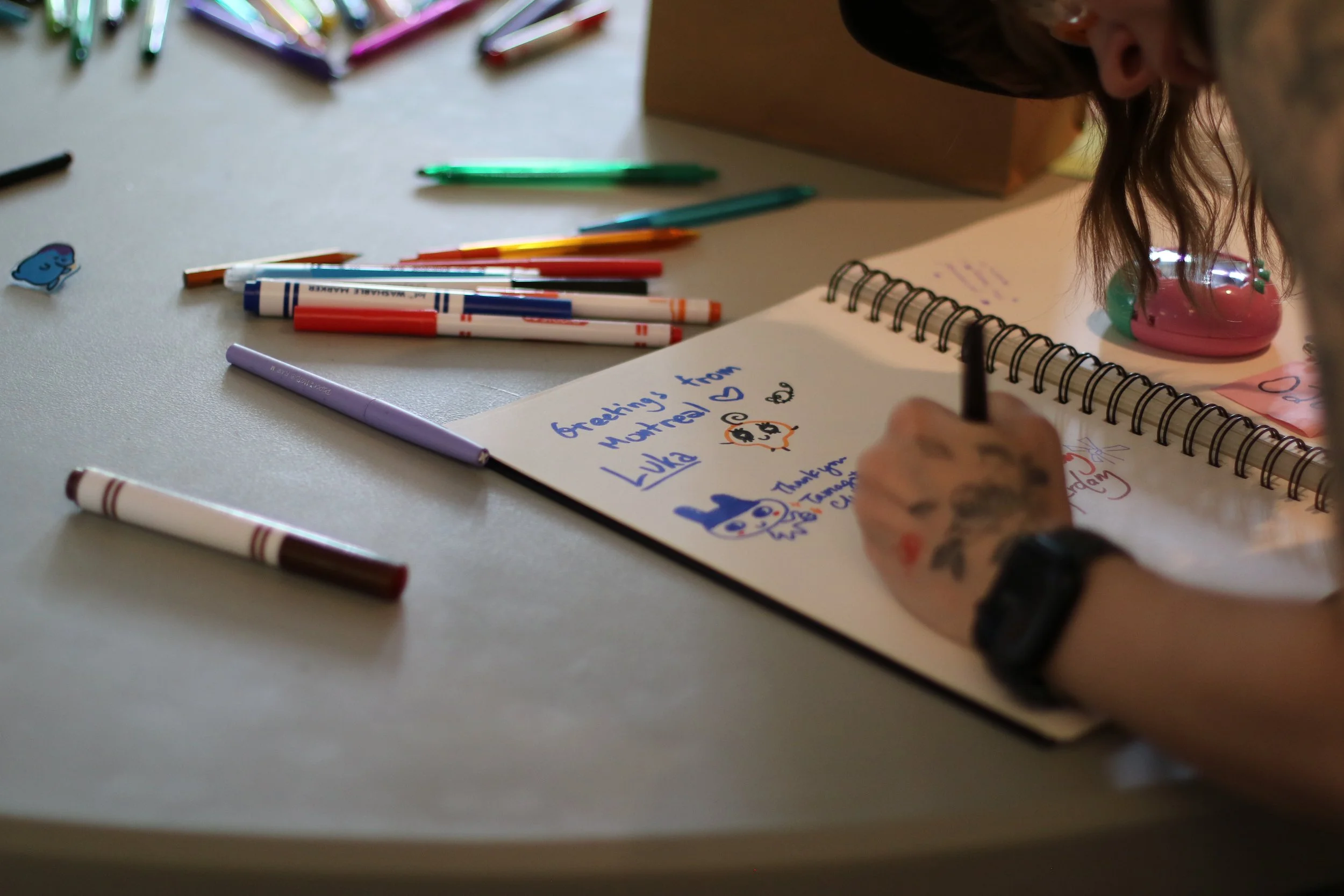
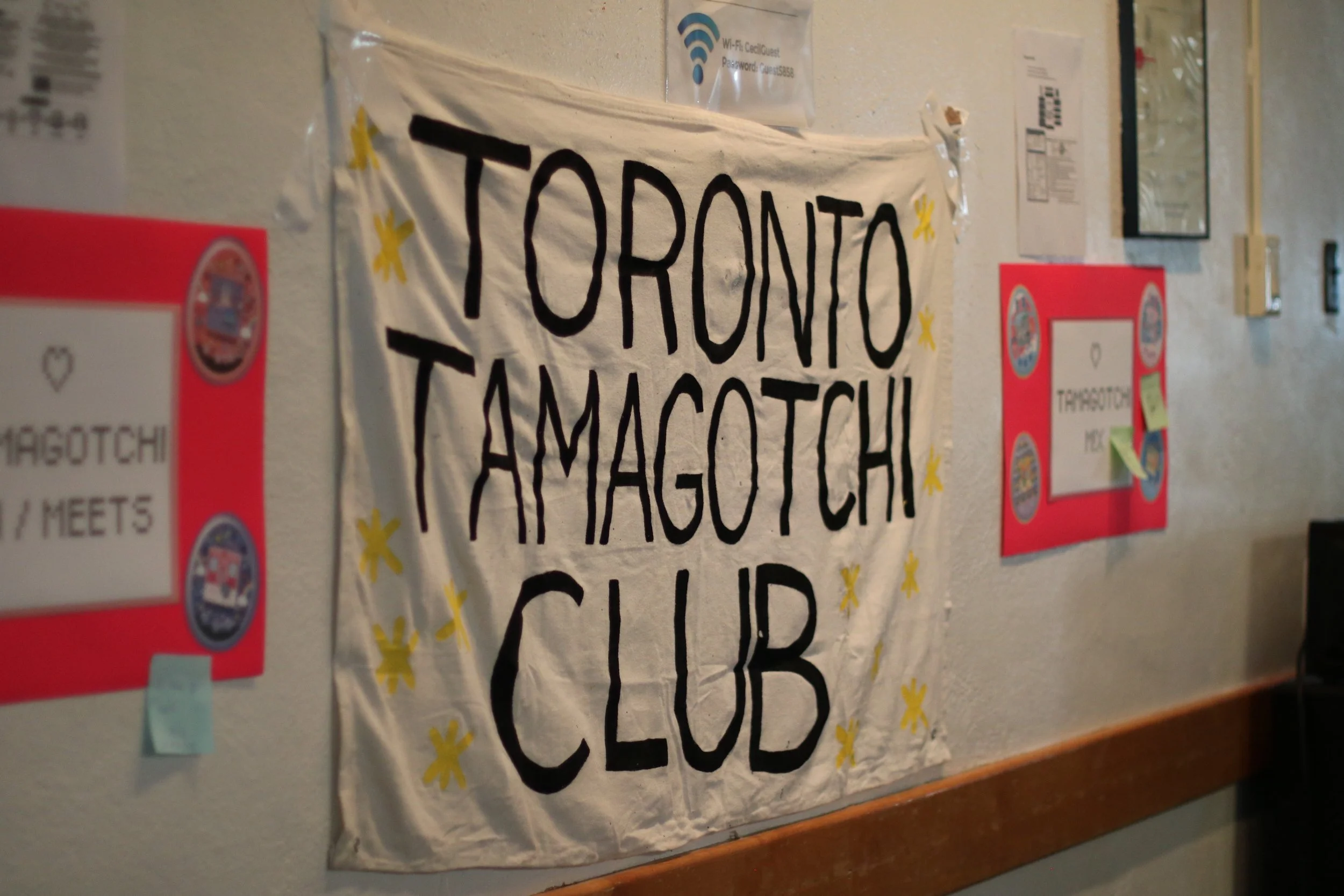
Twoey wonders if the club’s appeal stems from shared childhood experiences:
“I think that queer and trans people are often forced to grow up too fast, especially if you experience bullying or rejection from your family of origin,” Twoey says. “Reclamation of childhood interests is something I see a lot of queer people doing in adulthood, because they're remembering ‘actually, I'm not in survival mode anymore — or maybe I am — but I am willing to reengage with things that brought me happiness and joy as a kid and heal.’”
Twoey references some of the struggles that queer people often deal with.
“We know that queer and trans people are disproportionately affected by mental health and addiction issues,” she says. “That can be a huge challenge that follows us throughout our lives.”
A 2012 report published by The Center for American Progress, an independent policy institute, found that around 20 to 30 per cent of LGBTQ+ individuals struggle with substance abuse. Additionally, the report found that the LGBTQ+ community faces the external struggle of accessing adequate and “culturally competent health care services.”
Whether it’s subconscious or conscious, Twoey comes back to the idea that the Toronto Tamagotchi Club represents healing for some of its members.
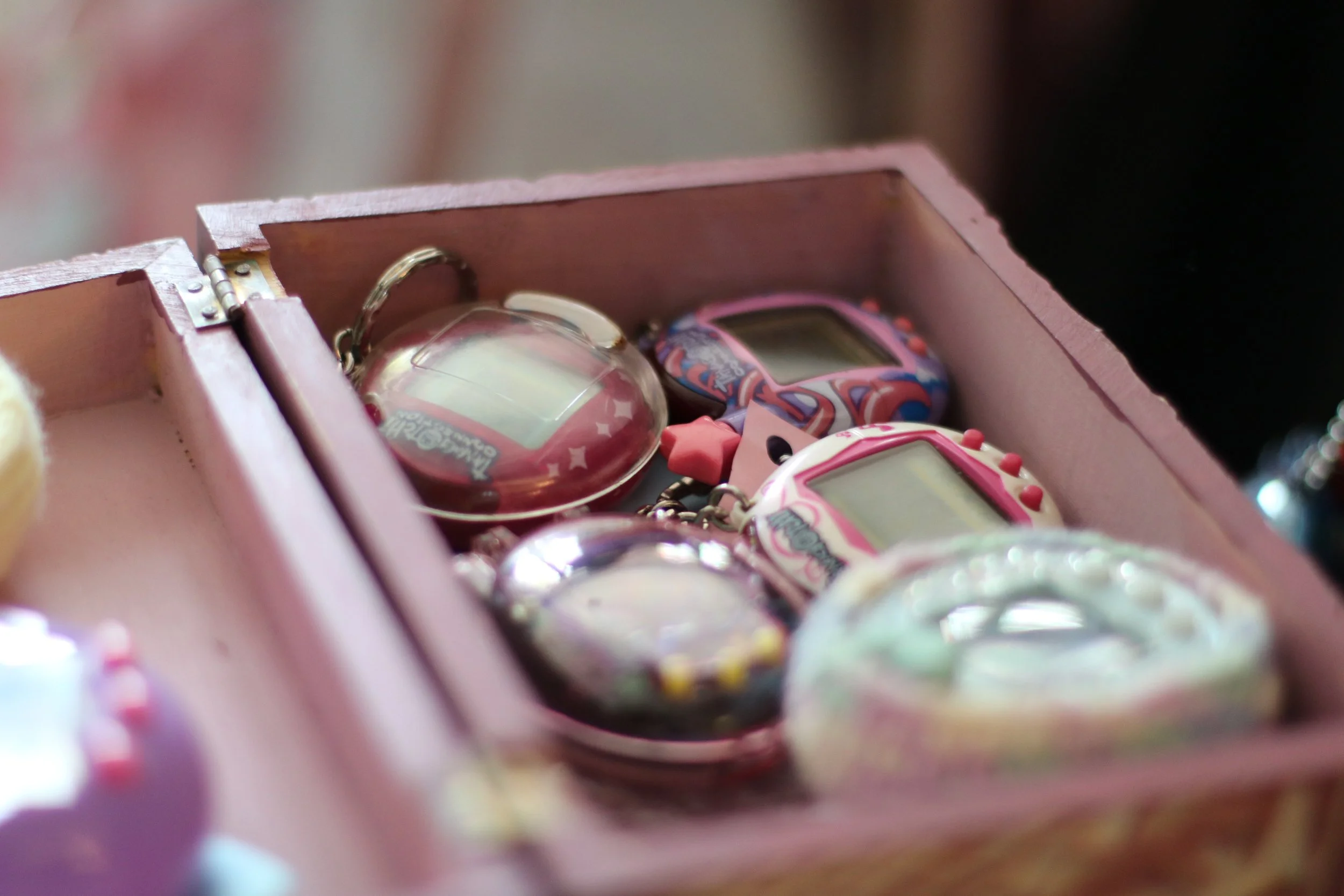
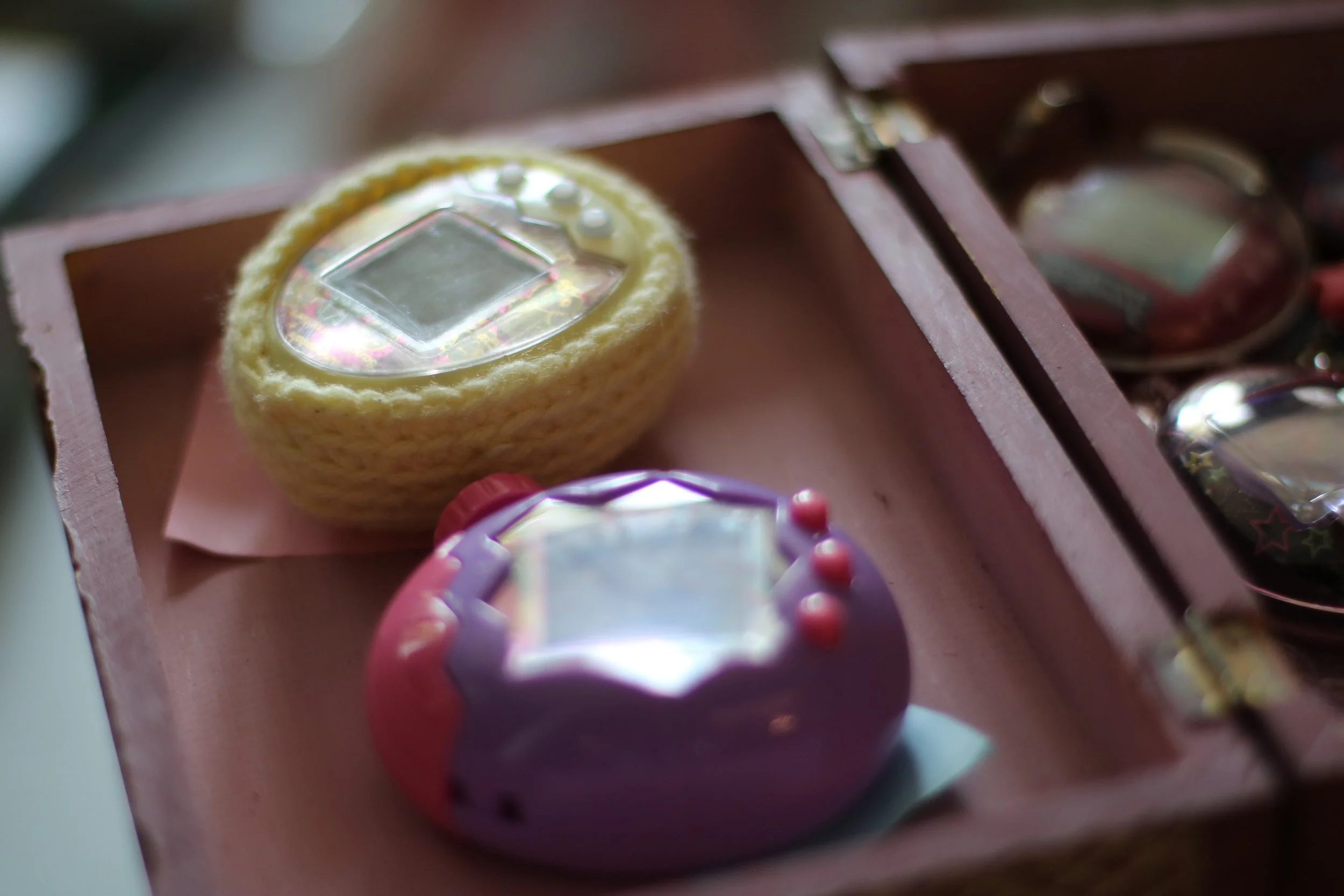
“I've heard many stories from people in this group saying caring for the Tamagotchi reminds them to take care of themselves,” she says. “I've even heard people say that caring for a Tamagotchi has saved their life because on days that they felt they couldn't get out of bed, they knew they had a little baby calling for them, asking them for breakfast. And then they need to remember to feed themselves.”
Kylie Feistmantl’s first time attending the club was in June 2025, when the group hosted its first-ever Pride-themed meetup. Allan Gardens was buzzing with drag performers, artisans, and people looking to connect their Tamagotchis. Initially, Kylie says she “was so shocked” seeing the number of outwardly queer people interested in Tamagotchis, but came to a similar conclusion as Twoey.
“I think that as adults, we kind of relish in some of these ‘childish’ things from our youth,” Kylie says. She explains that as a child, she went through “an ungodly amount” of bullying. She describes the experience of playing Tamagotchis as healing her inner child, specifically drawing connections to her growth as a trans woman.
“The more my transition has progressed over these past few years, the more I find myself delving into things that I wanted to do when I was a teenager, when I was a kid,” she says. “I'm doing things I had always wanted to do. It's just this natural compulsion of ‘I like that, and I still like that as an adult.’ It wasn't a phase. Same way being queer wasn't a phase.”
Kylie points out the parallels between the Toronto Tamagotchi Club and her experience as a drag performer: they both emphasize play and fantasy. She sees imagination as “a safe thing” that we do as children, but a skill that we often lose as adults.
“Something that is really important to me as a performer, as a queer person, is the concept of fantasy — and that is such a childlike thing, the idea of playing pretend… I think doing it as an adult feels wonderful and healing.”
More Tamagotchi clubs have been popping up across Canada and beyond. Longtime Toronto Tamagotchi Club member, Will Maneja, got to join Twoey on a trip to visit their counterparts in New York City. He was surprised to see such a strong connection between queer people here, too, saying “it felt like home away from home.”
“I never thought there would be other people who were still interested in the device, let alone people who were queer,” says Will. “You think you're different for playing with a toy at this age, but it's nice to see that there's still people out there who relate to you when it comes to your interests and also with your experiences.”
Another club member, Mune, says that being involved in the club has strengthened their overall connection to the Toronto queer community.
“It's hard to build connections with people in this giant city. And I'm glad that I have been able to meet so many wonderful queer people through the Tamagotchi club,” they say, describing that the friendships they formed within the club expand beyond their shared interest in the virtual pets.
“I get to see their growth and their amazing lives outside of the Tamagotchi club. I'm really thankful that the Tama club has allowed me to meet these people, and now I get to support them.”
When reflecting on the club, Twoey recalls the symbolic colours of the Pride flag. She mentions that yellow represents joy.
“Yellow is on the pride flag for a meaning. We're meant to honour joy and experience pleasure in the world,” she says. “A lot of times we hear about queerness as this kind of curse or this burden that we carry, and I think that could not be further from the truth.”
As the Toronto Tamagotchi Club grows, it continues to inspire joy — by encouraging people to indulge in their childlike interests, care for themselves, meet new friends, and feel embraced for who they are.
“Queerness is such a gift,” Twoey says. “And I hope that the Tamagotchi Club helps people connect with the yellow and the sunlight and the brighter things in life.”
Stay up to date with the Toronto Tamagotchi Club on Instagram: @toronto.tamagotchi.club.