


Take a Walk Through Ottawa’s Queer History
with Fairy Cowboy Tours
by Maeve Devries
It’s funny how you can live somewhere your whole life, oblivious to the history that surrounds you. How many storefronts, murals, parks and squares do you pass every day without stopping to wonder about the lives they’ve lived? Every street tells a story, and when you listen, the city opens up to you.
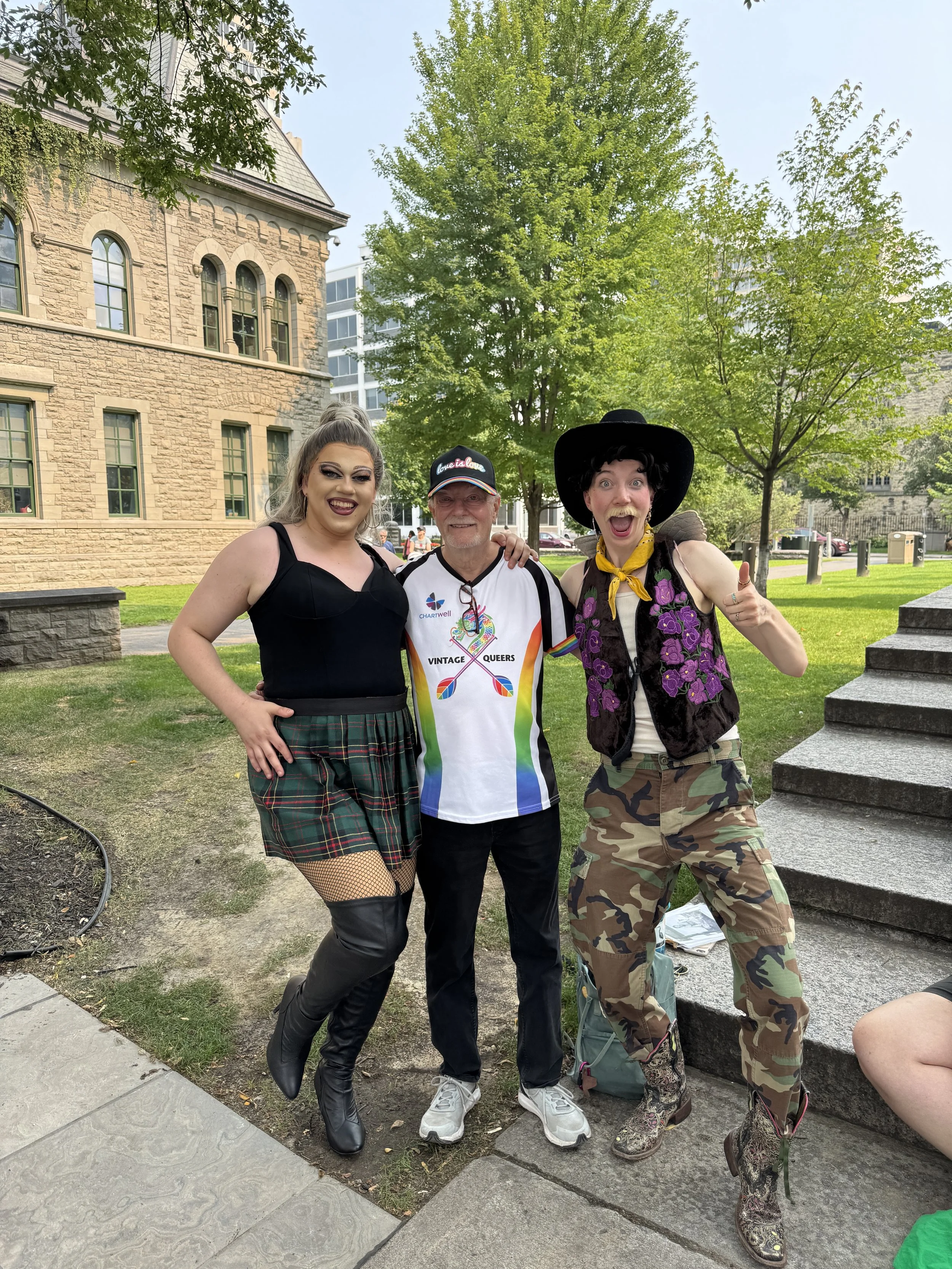
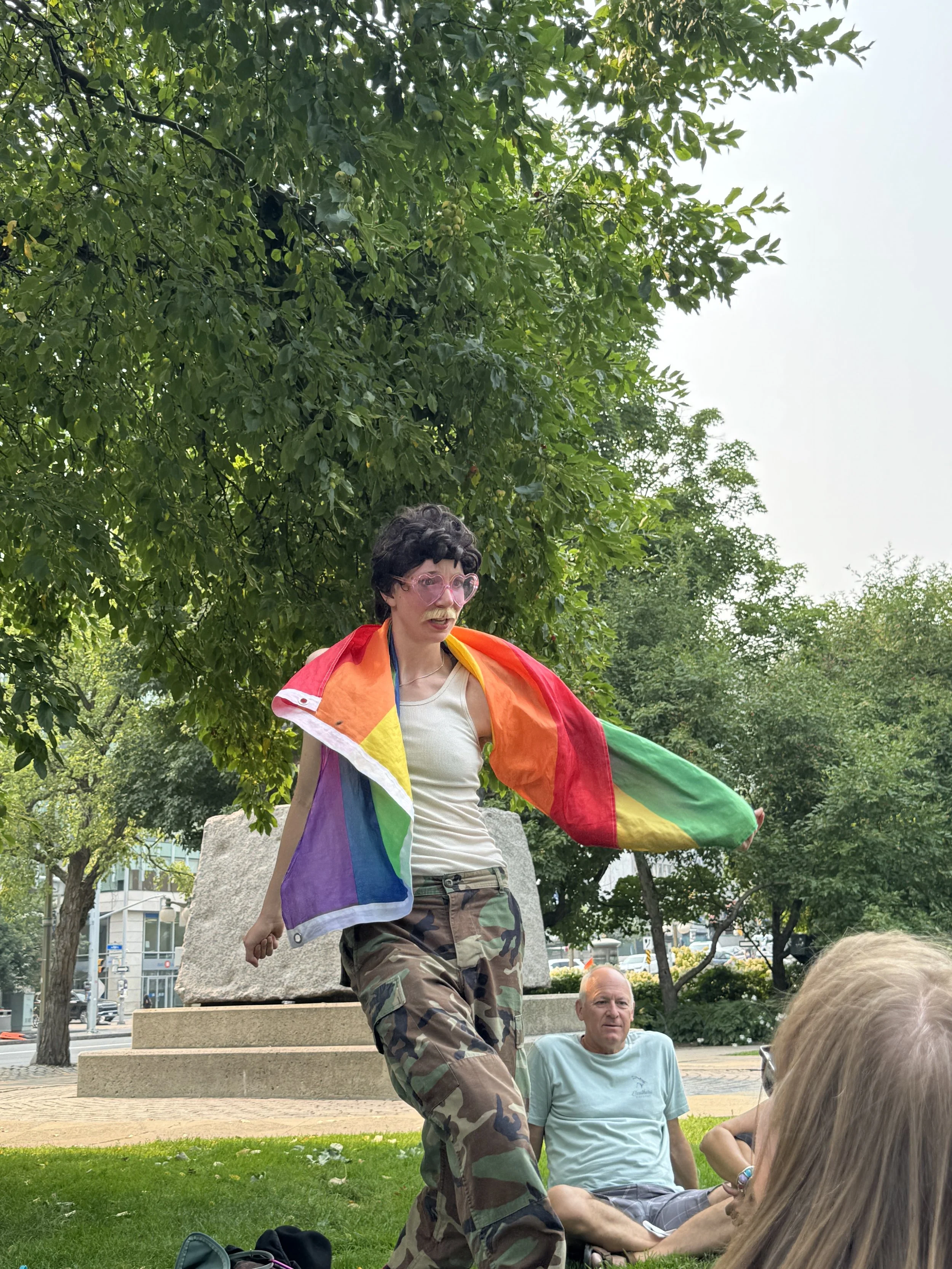
When I arrived at Dundonald Park on a sunny afternoon, I had no trouble spotting the tour party. There was a circle around none other than drag king Morgan Mercury. He donned his signature cowboy hat, moustache, and fairy wings.
The tour guide behind the ‘stache is Meghan Aglaia Burns, an Ottawa-based creative who has entertained the community as a multi-talented performer, writer and producer.
When I asked about the inspiration behind their drag name, I learned about the time Meghan spent working as a camp counsellor for queer youth at Camp Ten Oaks. The teens in their cabin affectionately morphed “Meghan” into “Morgan”. At their final campfire, the youth joined Meghan in a drag performance of Queen’s “Don't Stop Me Now”. This was the debut of Morgan Mercury, combining the nickname with an homage to queer music icon Freddie Mercury.
In April of 2024, Meghan launched Fairy Cowboy Tours. With a Bachelor in Public Affairs and Policy Management, a professional background in public education, and a personal connection to the 2SLGBTQ+ community, the idea made total sense. After seven years of experience running tours for organizations like the Canadian Museum of History, the Canadian War Museum, Parks Canada, and the Canadian Agriculture and Food Museum, Meghan has picked up a thing or two about making educational topics engaging.
“It’s a very intimate experience, in many ways, to be herded around a city … On many layers — the body, the mind, and the connection to other people — it works really well to tell stories and have people take in the information.”
Aiming to represent a broad range of queer experiences from the past 100 years, Meghan dove into research, reading books by local authors, exploring online rabbit holes, and collecting resources from peers.
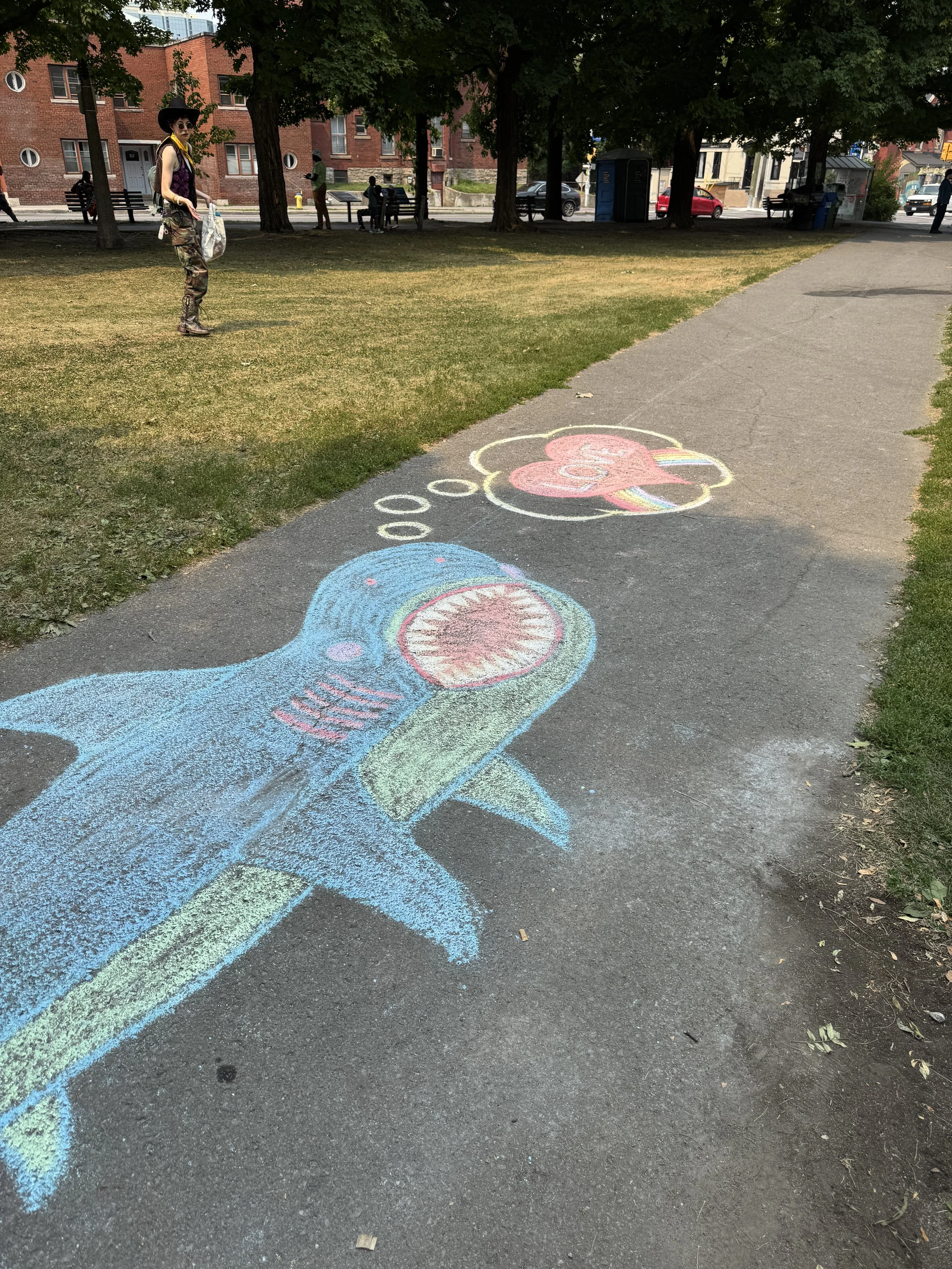
A key reference was the Village Legacy Project, a multi-platform initiative completed in 2017. It offers a LGBTQ+ archive for the Ottawa/Gatineau region, and includes some fun facts about the stretch of Bank Street dubbed Ottawa’s historic gay village, which got its moniker from the many gay businesses there from the 1980s to early 2000s. Meghan was also one of 10 artists invited to a youth summit about the LGBT Purge, hosted by the Canadian Centre for Gender and Sexual Diversity in March 2024. These two pivotal resources pointed Meghan toward Centretown, and it was just a matter of filling in the gaps of the tour route (or perhaps more accurately, narrowing it down).
Much of this information was completely new to Meghan: “I just thought that was crazy, as someone who has always lived in Ottawa for my 26 years and who's been working in public history tourism for seven years… I'm a gay person living in Ottawa. Why don't I know any of this?”
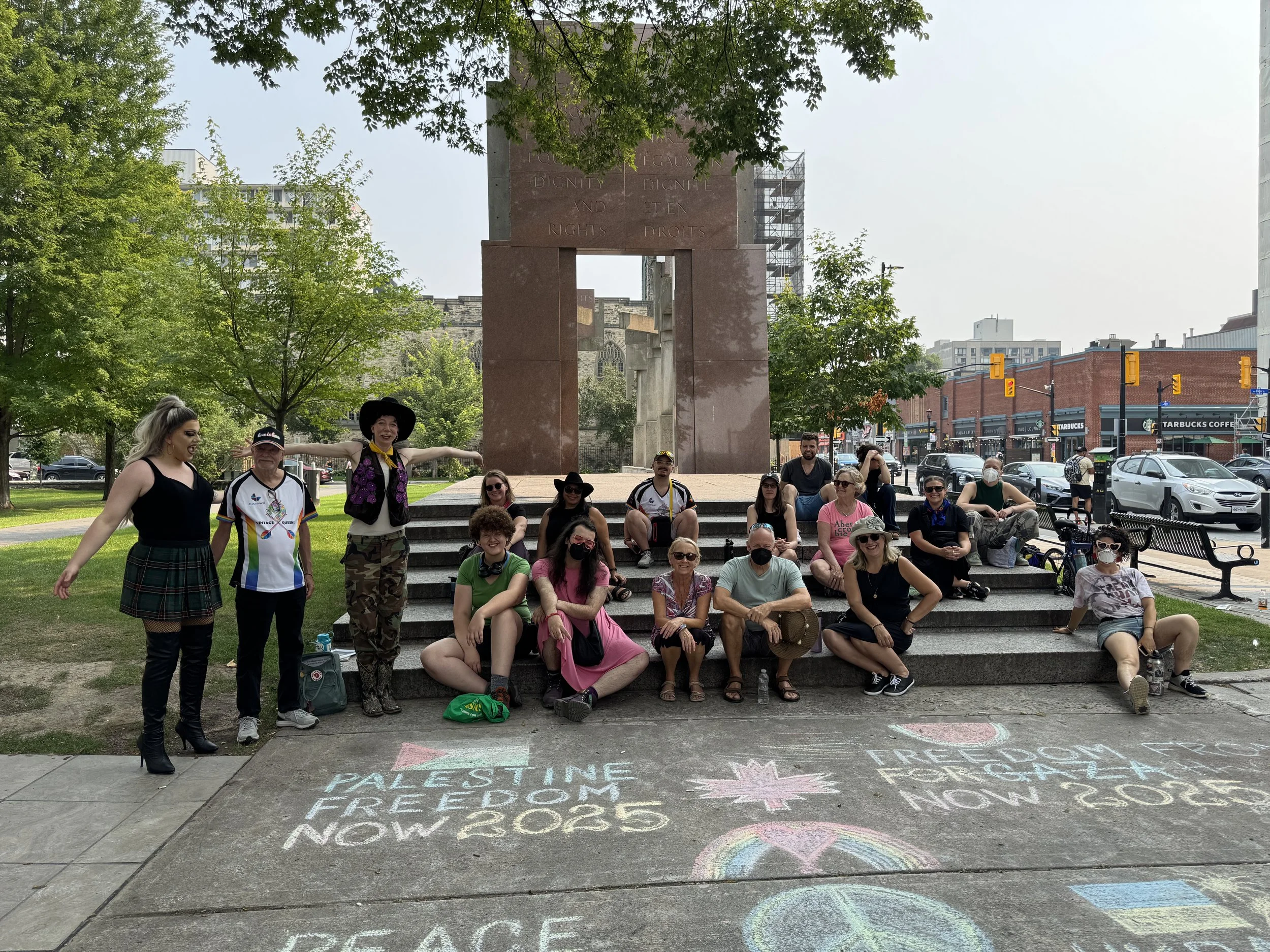
That hot Sunday afternoon, I was in for 2 hours across 1.5 kilometres from Dundonald Park to Confederation Park. To start, Morgan encouraged us all to introduce ourselves. Many of us self-identified as 2SLGBTQ+, with much to learn about our local community’s history. There were also some allies who were eager to broaden their knowledge.
“People are really excited, generally, to engage, so it’s usually a really sweet group and a good way to meet people in the community.”
Our first stop was at the outskirts of the park, where there stood an informational plaque about Igor Gouzenko. He was known for exposing the presence of Soviet spies in Canada during the emerging Cold War in 1945. This led to the LGBT Purge: a reactionary effort by the Canadian government to identify employees with “moral defects”, which were believed to make them more likely to align with communists. Queerness was considered one of these “defects”. Anyone found or suspected to be queer was barred from the public service and military. Thousands lost their jobs.
At this point, Morgan revealed a puppet that resembled a mechanical contraption covered in fruit: The Fruit Machine. The puppet spoke about the operation of the same name.
The Fruit Machine was a series of psychological tests created by Carleton University psychology professor Dr. Frank Robert Wake during the LGBT Purge. It measured pupillary response to images, some sexually explicit. As Morgan describes it, the government tried to develop “gaydar”. Ultimately, the results of these tests were largely unhelpful as they failed to consider factors like varied pupil size, photo brightness, and bisexuality.
Another failed initiative was the pinpointing of homosexual gathering places. It proved impossible to keep accurate maps because queer people existed everywhere. Although the political context was grim, the shoddy attempts to wrangle the gays were laughable.
“It was good to hear about the fact that, even though there was concerted effort, and even though this was such a priority at the time, it was not successful.”
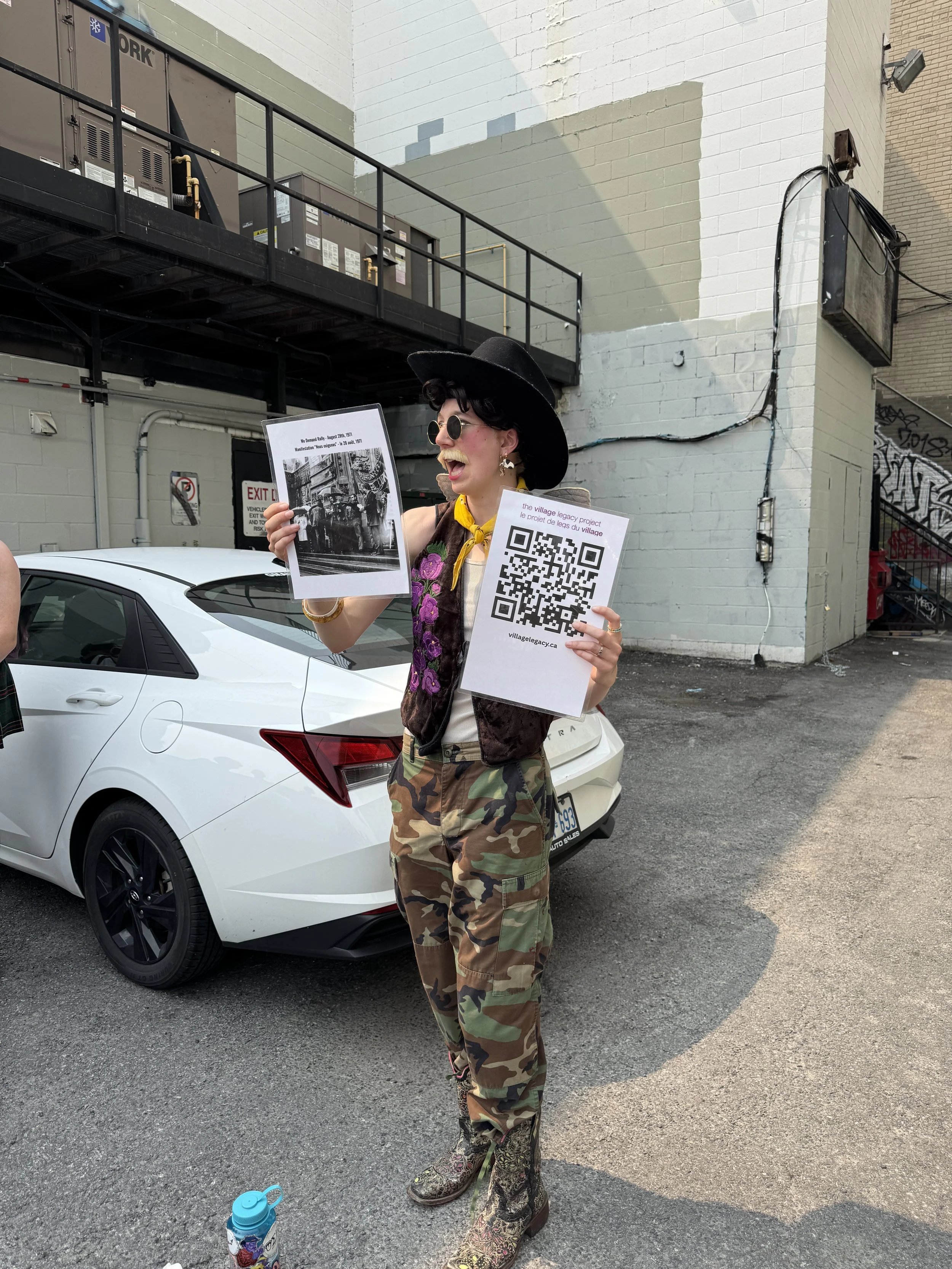
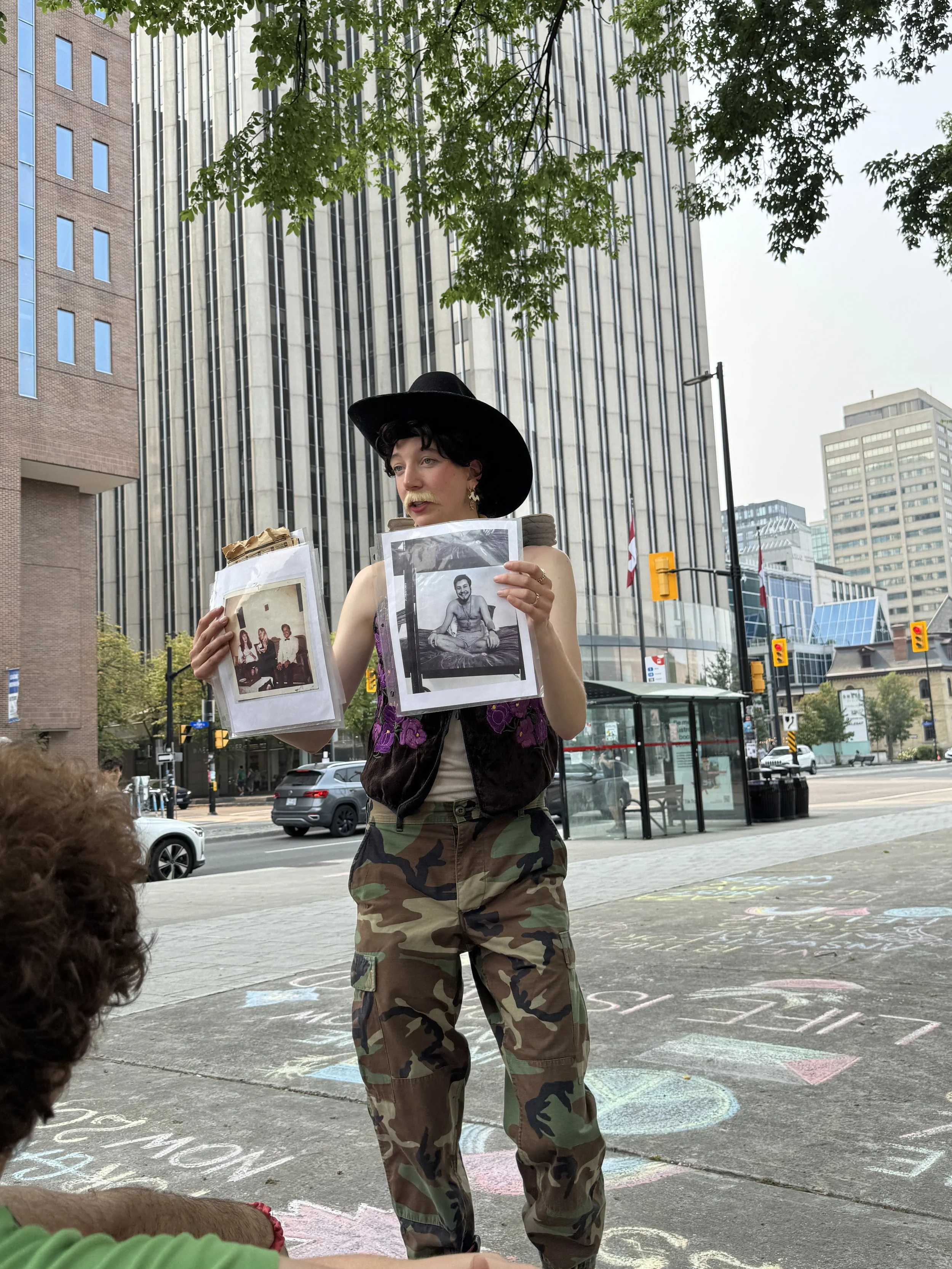
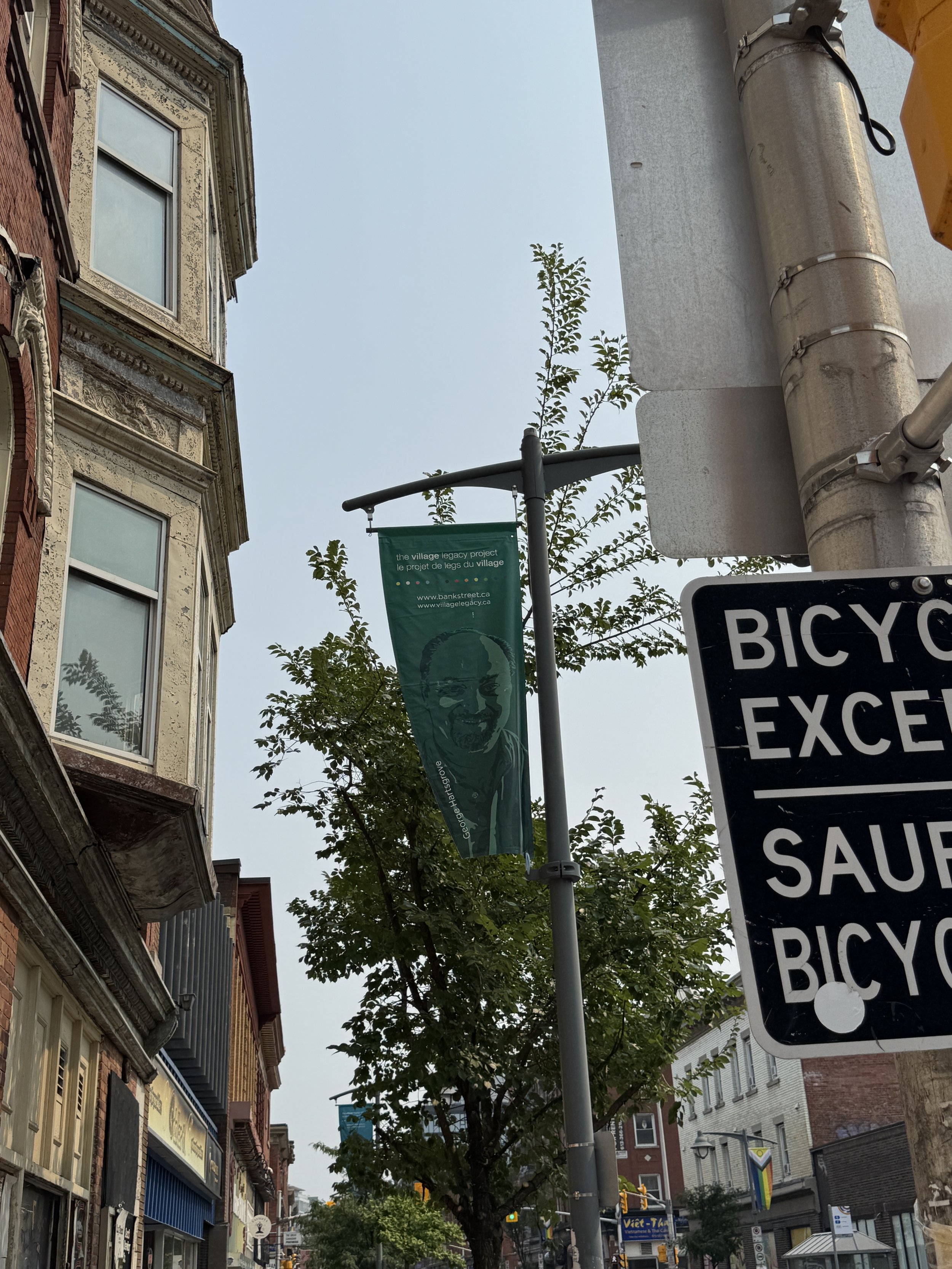
As we reached Bank Street, we stopped to admire the “We Demand” mural, which commemorates Canada’s first gay rights protest in 1971. We passed by a number of lamppost banners lining the road, each highlighting someone who made an impact in the Ottawa queer community. One of those figures was walking with us as a special guest: George Hartsgrove, President of the Ottawa Senior Pride Network. It was a treat to have him there, chiming in with personal anecdotes and fun facts along our walk.
A few quick highlights: I learned that the first national conference of lesbians was hosted in 1976 by Lesbians of Ottawa Now. Morgan shouted out queer organizations as we passed them, including Bruce House, MAX Ottawa, Kind Space, and Ten Oaks Project. It was moving to hear about the connection between local businesses and activism, including how many nightlife venues regularly collected donations for community organizations. At the Canadian Tribute to Human Rights monument by City Hall, we sat down for storytime about trans figures throughout the decades.
One of Morgan’s favourite stories to share is about Ottawa’s first female mayor, Charlotte Whitton. A controversial figure who held office in the ‘50s and ‘60s, she lived with a woman named Margaret Rose Grier for 25 years — history will say they were roommates. Charlotte and Margaret had a cottage together and owned a cat named Rusty. Morgan performed a reading of some excerpts from the passionate, poetic letters that the pair wrote to each other.
We arrived at our final stop: Confederation Park. This was flagged as a gay cruising location during the LGBT Purge, and officials would try to spot queer activity. They took comical measures to observe who was hanging at the nearby gay bar in the basement of the Lord Elgin Hotel (or Lord Organ, as it was known), including cutting eyeholes out of newspapers. Morgan blessed us with a lip sync performance of “Land of Confusion” by Genesis, reenacting the ridiculous scenario.
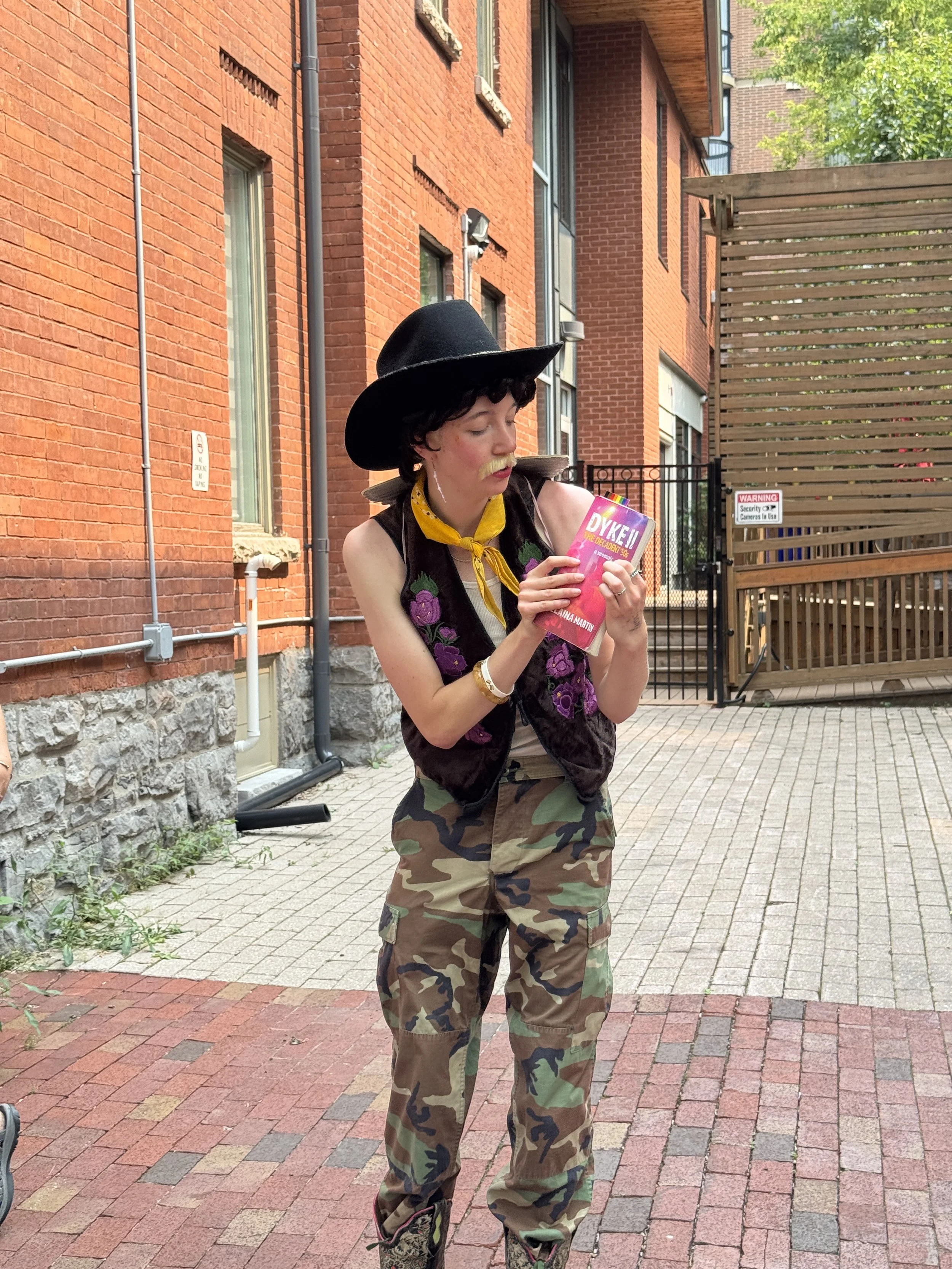
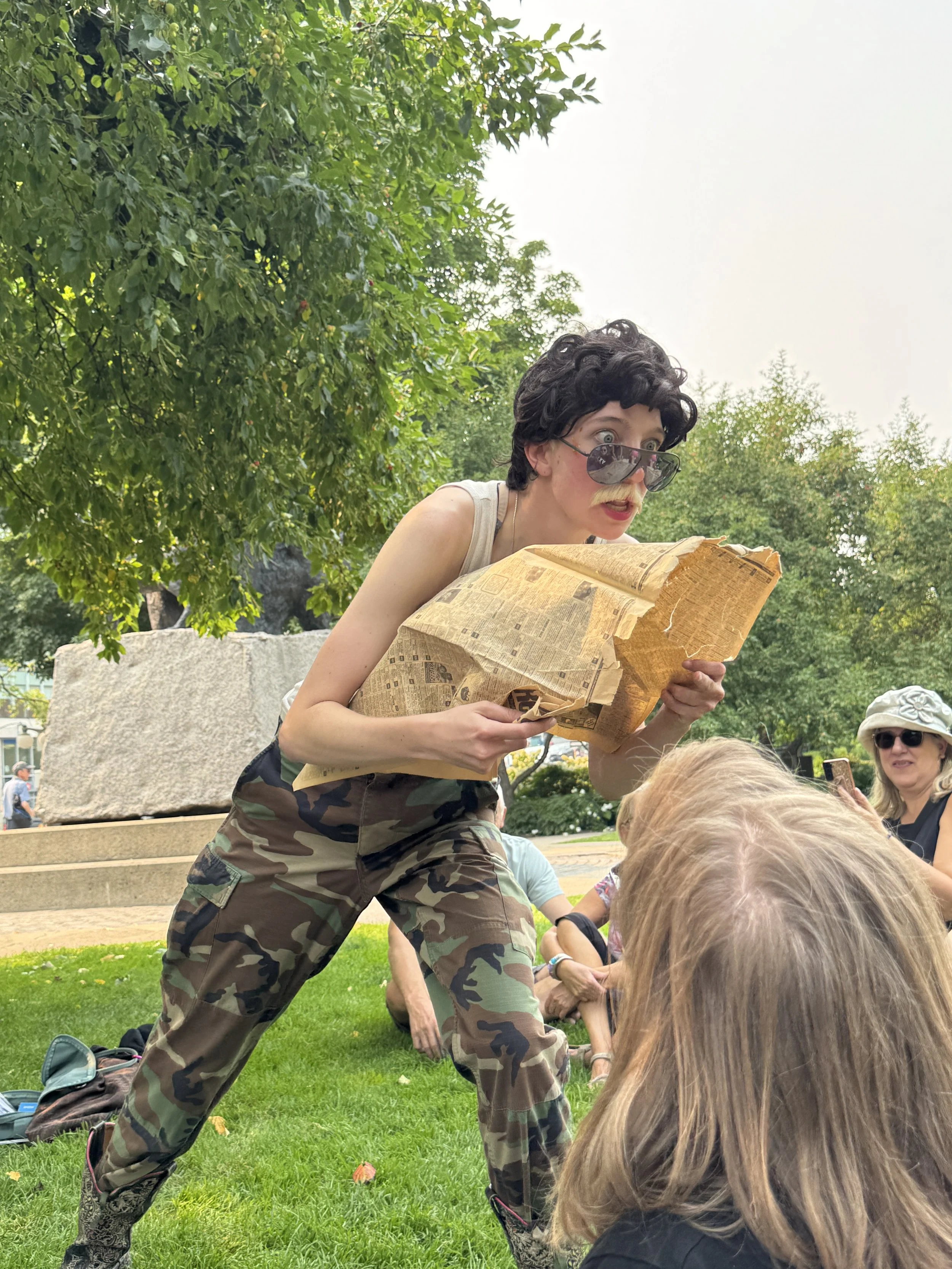
While queer history is often marked by oppression and hardship, Morgan managed to strike an optimistic tone — whimsical, even — without glossing over the hard truths. It’s a reminder that even through difficult times, we can support and love each other, creating spaces to be joyful. Morgan says these histories are so important for people to hear in the current political climate because they can be looked to as “blueprints of what to do next”.
“We're looking at the context of everything, and we're still finding the joy … there are still drag queens, there are still gay bars, there are still people falling in love, there are still ways that people are having a good time.”
At the end of the tour, we were treated to a picnic of Gongfu Bao buns (which lived up to the hype), assorted treats from Little Jo Berry’s, and refreshing beverages from City Seltzer — all local businesses. The rest and food felt well-earned after two hours of walking in the sun.
As we enjoyed the park shade, we got one more lesson from a second special guest — a member of Morgan’s drag family. Eden Moore, a prolific drag queen and event producer, shared the behind-the-scenes process of events production in Ottawa.
My hometown’s history came to life that day. I imagined friends out dancing, quiet moments between lovers, and protesters fighting so that their love didn’t have to be quiet. It’s people like Morgan Mercury Moore/Meghan Aglaia Burns who remind us that we are part of this living history, and we decide what the next chapter looks like.
Keep an eye on @fairycowboytours on Instagram for upcoming tour dates and @themorganmercury for gay shenanigans.