
Your Clothes Don’t Belong In Toronto’s Landfills
A conversation with Nikki Byrne and Kelly Drennan of Fashion Takes Action at ReMode, the organization’s annual circular fashion event.
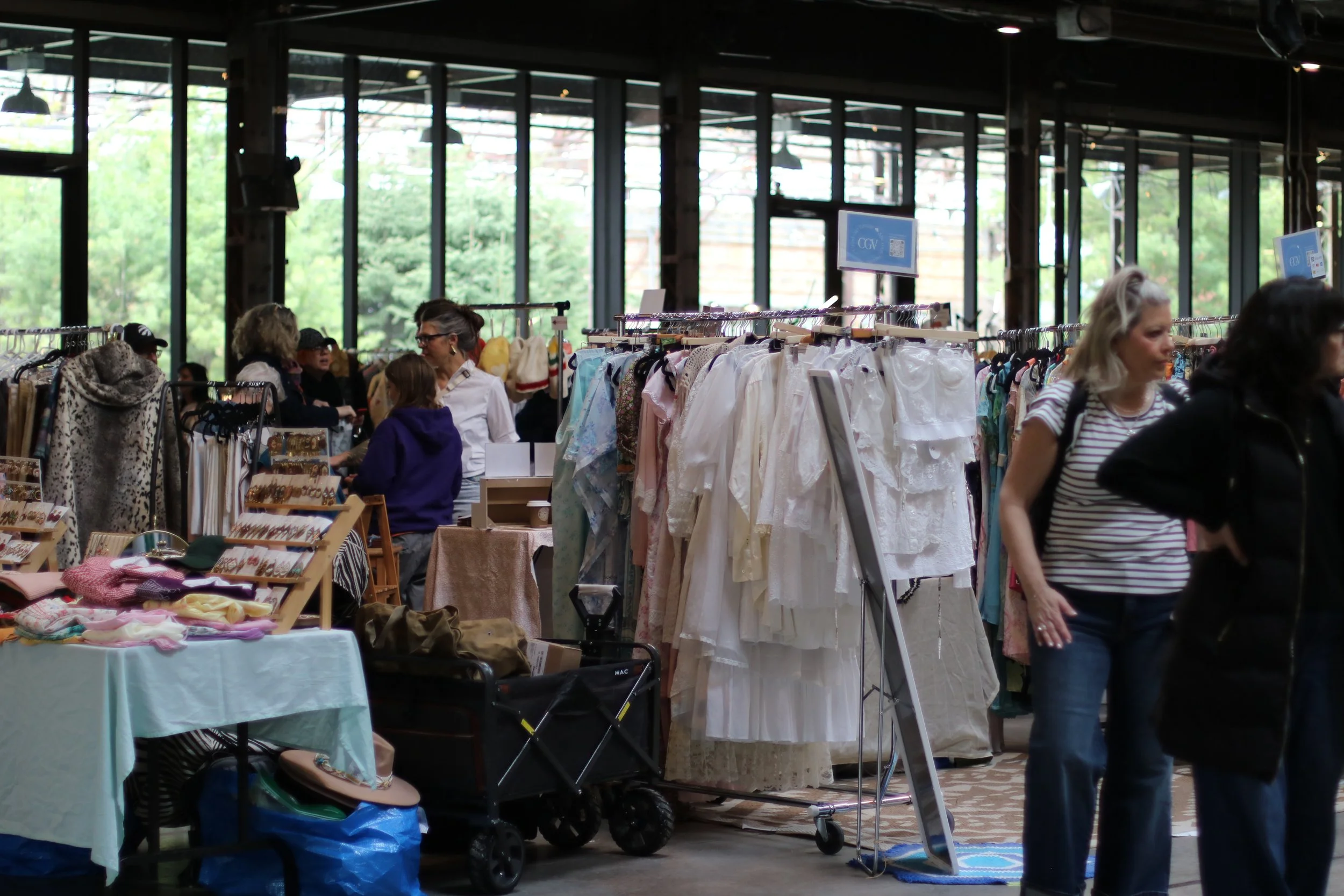
Vintage clothes line the racks at the ReMode Circular Fashion Event. Photo Credit: Asha Swann
“No textiles belong in the garbage.”
That’s what Nikki Byrne, director of programs and partnerships at Fashion Takes Action, believes. Byrne describes the devastating environmental impact of the textile industry: hundreds of thousands of tonnes end up in Canadian landfills every year. Fashion Takes Action, a Canadian non-profit focused on sustainability within the fashion industry, conducted a massive study on the feasibility of textile recycling within the country. The 2021 study found that Canada lacks a textile recycling industry and mechanical textile recycling capabilities as a whole. The result means everyday textiles like towels, bedding, curtains, and shoes, all end up in the landfill. But Byrne says it isn’t just ripped curtains and stained bedsheets in the landfill: it’s brand-new pieces of clothing.
“We were finding things in the waste stream that had tags still on them,” she says. “[They] were perfectly new and wearable, but they were disposed of.”
On April 19, 2026, Fashion Takes Action organized and hosted ReMode, an annual circular fashion festival. This year’s event, the fourth overall, took place at Evergreen Brick Works in Toronto, and amassed an attendance of over a thousand people for the single-day event. ReMode focused partially on conscious consumerism, with attendees able to participate in clothing swaps, have clothing repaired on-site, shop secondhand, and more. But overall, ReMode isn’t about buying your way into sustainability. Throughout the afternoon, attendees were encouraged to participate in The Talks, where industry leaders and policy experts discussed sustainability on a larger scale.
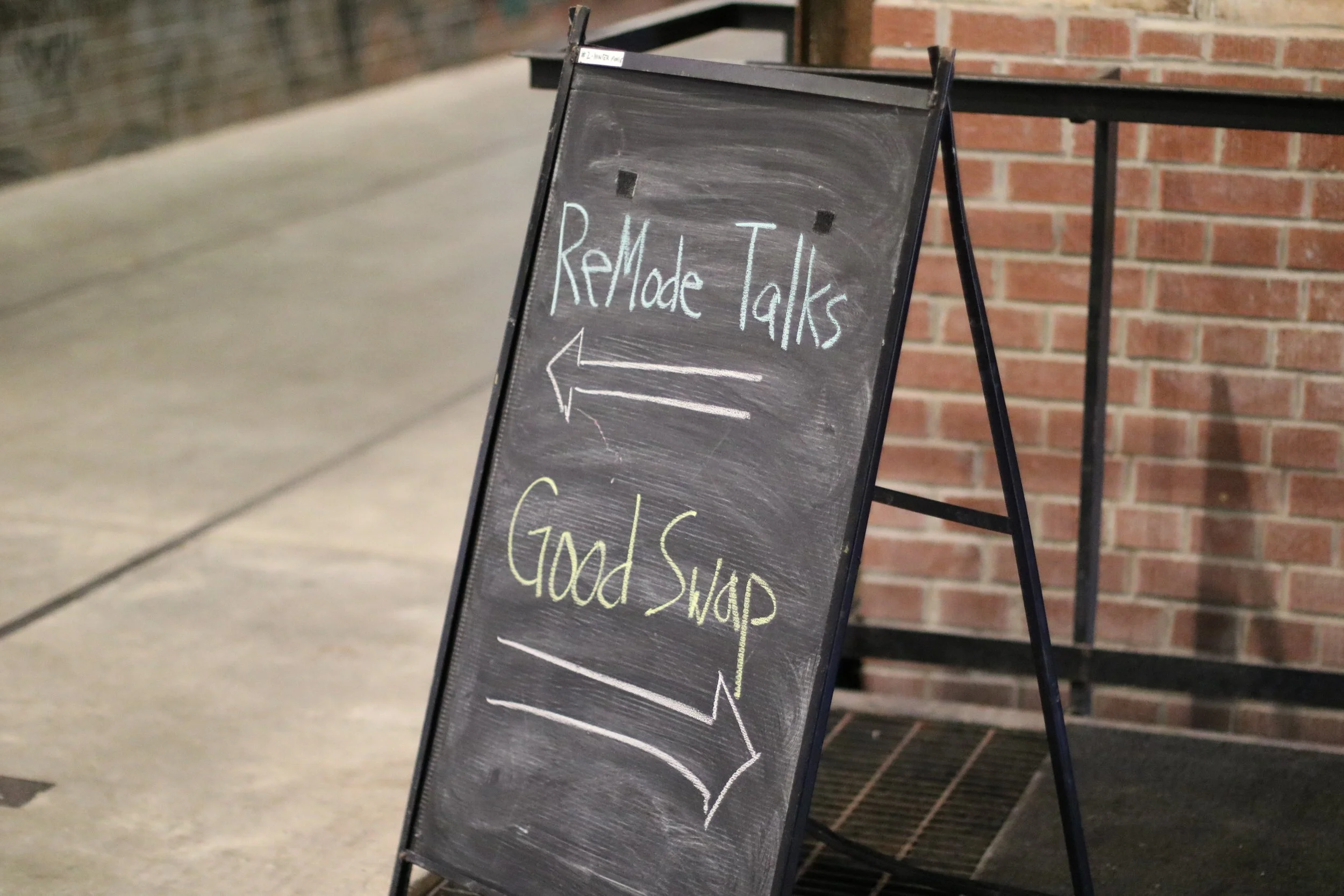
A chalkboard sign points to the talks and clothing swap at the ReMode Circular Fashion event. Photo Credit: Asha Swann
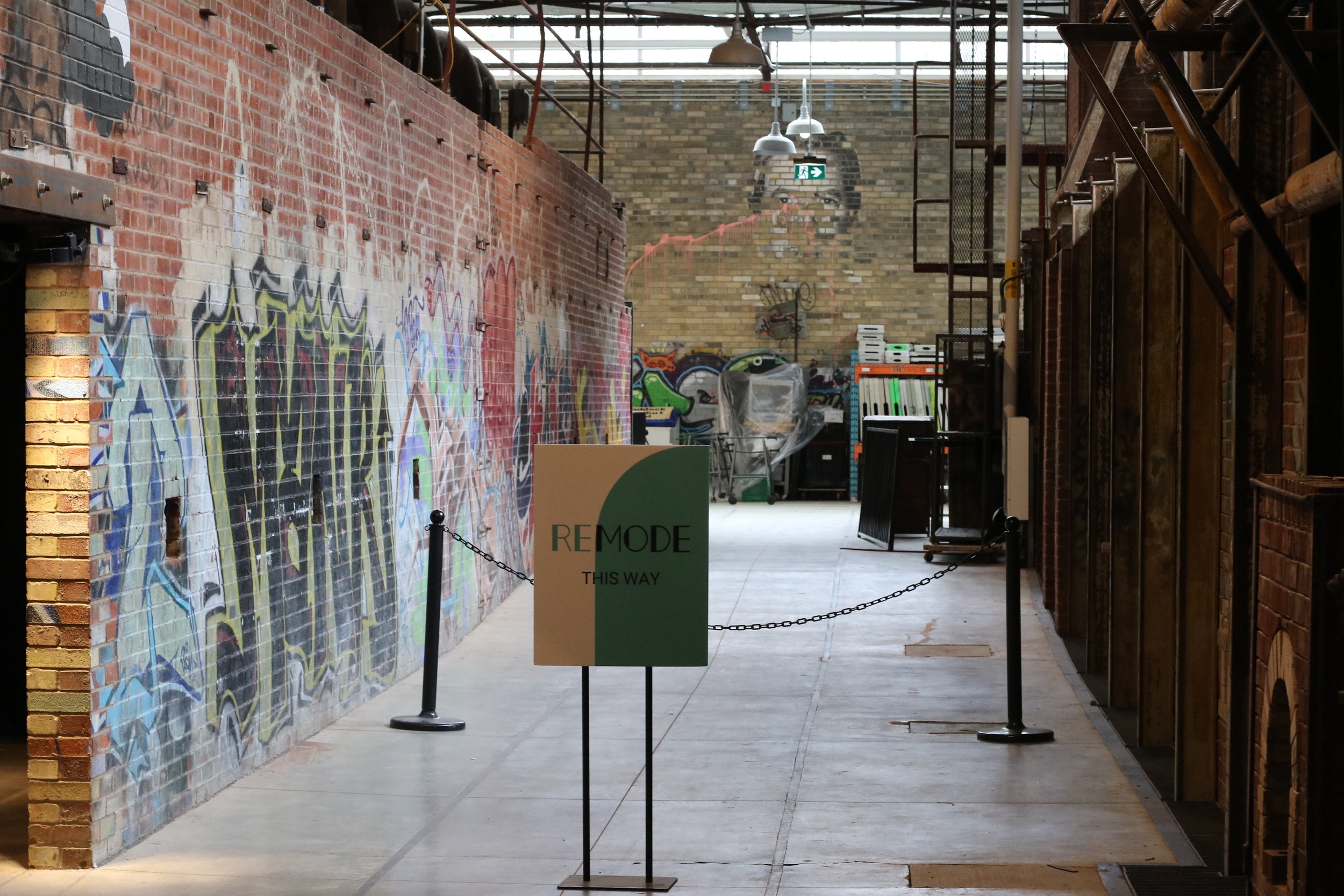
A sign separates the ReMode talks from the rest of the event. Photo Credit: Asha Swann
Recycling textiles and clothing isn’t as straightforward as our typical recycling methods: putting a piece of cardboard in the blue bin and waiting for a truck to come pick it up at the end of the week. Bryne explains that municipalities can be a part of the solution, but there are layers of complexities in place. Fashion Takes Action, she says, aims to facilitate some solutions through the Canadian Circular Textiles Consortium, alongside over 100 other stakeholders.
“We are working with the municipalities, and ideally it would become part of our municipal waste system, but it's not,” she says. “And because of our winters and because of our weather, it's a very complex and expensive thing to put into place. So yes, ideally, there would be a municipal system in place for residents. But it's very difficult.”
Toronto is just one city working to reduce its textile waste. In May, the City of Barrie partnered with Recycling Rewards to offer a temporary curbside textile collection program. Some areas, like Niagara Region, Newmarket, and Ottawa, have textile collection containers set up at different parking lots throughout the cities. But these containers, if people can access them, aren’t offering proper textile recycling: instead, the textiles collected are either sorted for reuse or, most commonly, donated to a nearby thrift store.
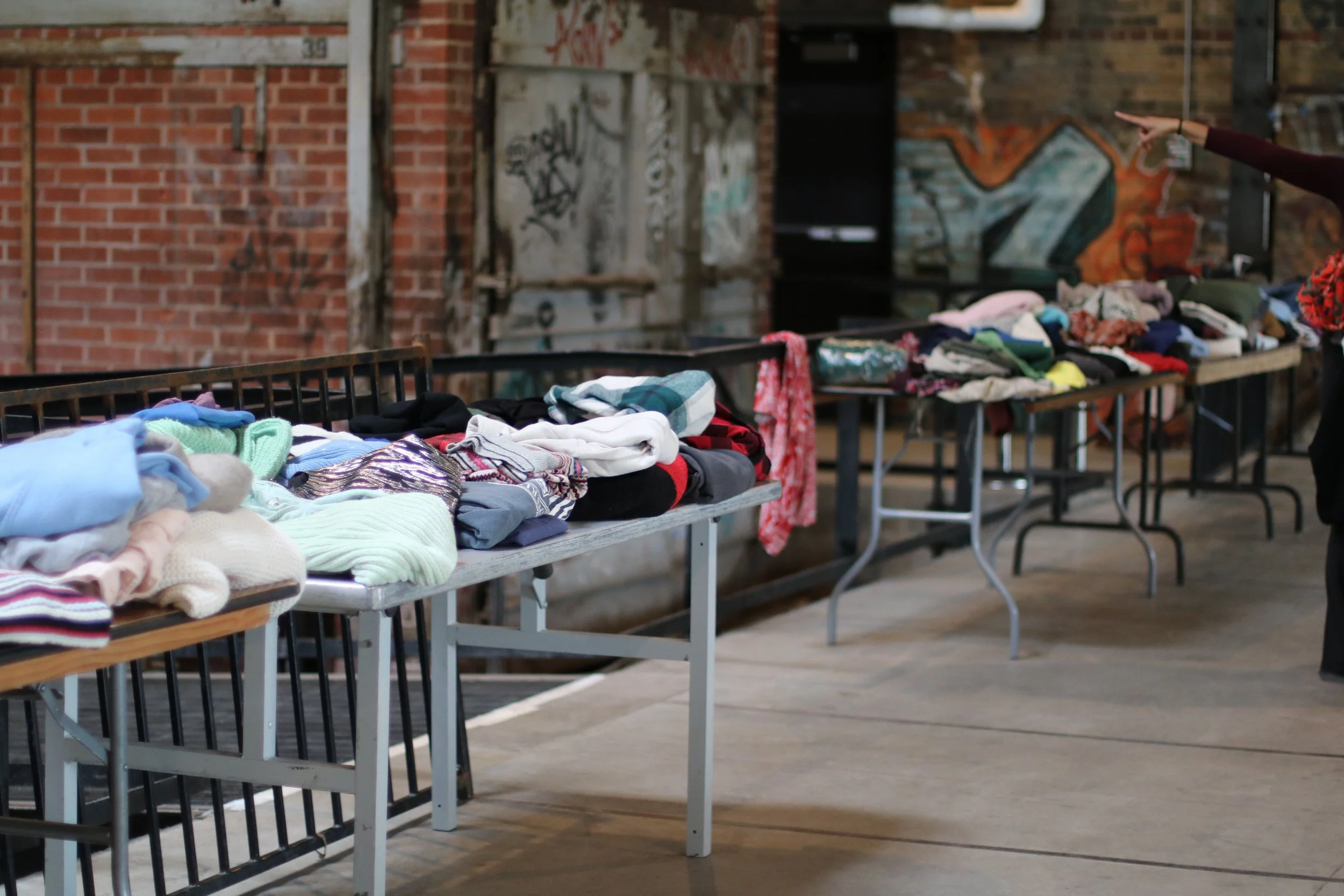
Folded clothes at the ReMode Circular Fashion event ahead of the clothing swap. Photo Credit: Asha Swann
Fashion Takes Action’s executive director Kelly Drennan says one of the reasons why it’s so difficult for places – even major cities like Toronto – to properly recycle textiles is because of the manufacturing process of combining natural and synthetic fibres. But even natural fibres release greenhouse gases that can get trapped when they start to decompose in a landfill.
“If it's a synthetic textile – and which 67 per cent of our clothing contains synthetics — it's plastic,” she says. “And just like a plastic bag or plastic straw, it's just going to stay in the landfill forever. Whereas if it's a natural fibre, so if it's cotton or linen or hemp or wool, it will eventually decompose in the landfill: but it releases methane and CO2, which are greenhouse gas emissions.”
Drennan describes recycling as “a last resort.” Instead, she urges people to focus on fighting overconsumption.
“The most important thing is that we need to reduce how much we're buying,” she says. “We buy 60 per cent more clothes today than we did 20 years ago, and we keep the average garment for half as long.”
Drennan says a key point of ReMode is to help the average consumer to think sustainably about what they have in their closet and take action in their community. Attendees had the chance to listen in on The Talks, where an expert would deliver a bite-sized presentation on sustainable living. Drennan’s talk, ‘From Closet to Community: How to Lead Local Textile Action,’ was co-hosted by MPP Mary-Margaret McMahon and Myrtile Remond-Bernon of the No Buy Textile Project. Even though McMahon was the only politician in attendance, Drennan stressed the importance people have over influencing public policy and legislation.
“A lot of people think, ‘Oh, I'm just one person. I can't do this.’ But you know what? You build community, and you get the numbers, and collectively, it's impactful,” says Drennan.
Drennan explains that Fashion Takes Action works year-round: the organization aims to “engage policy makers at all the different levels.”
“So we're excited to be engaging more now with government on policies,” she says.
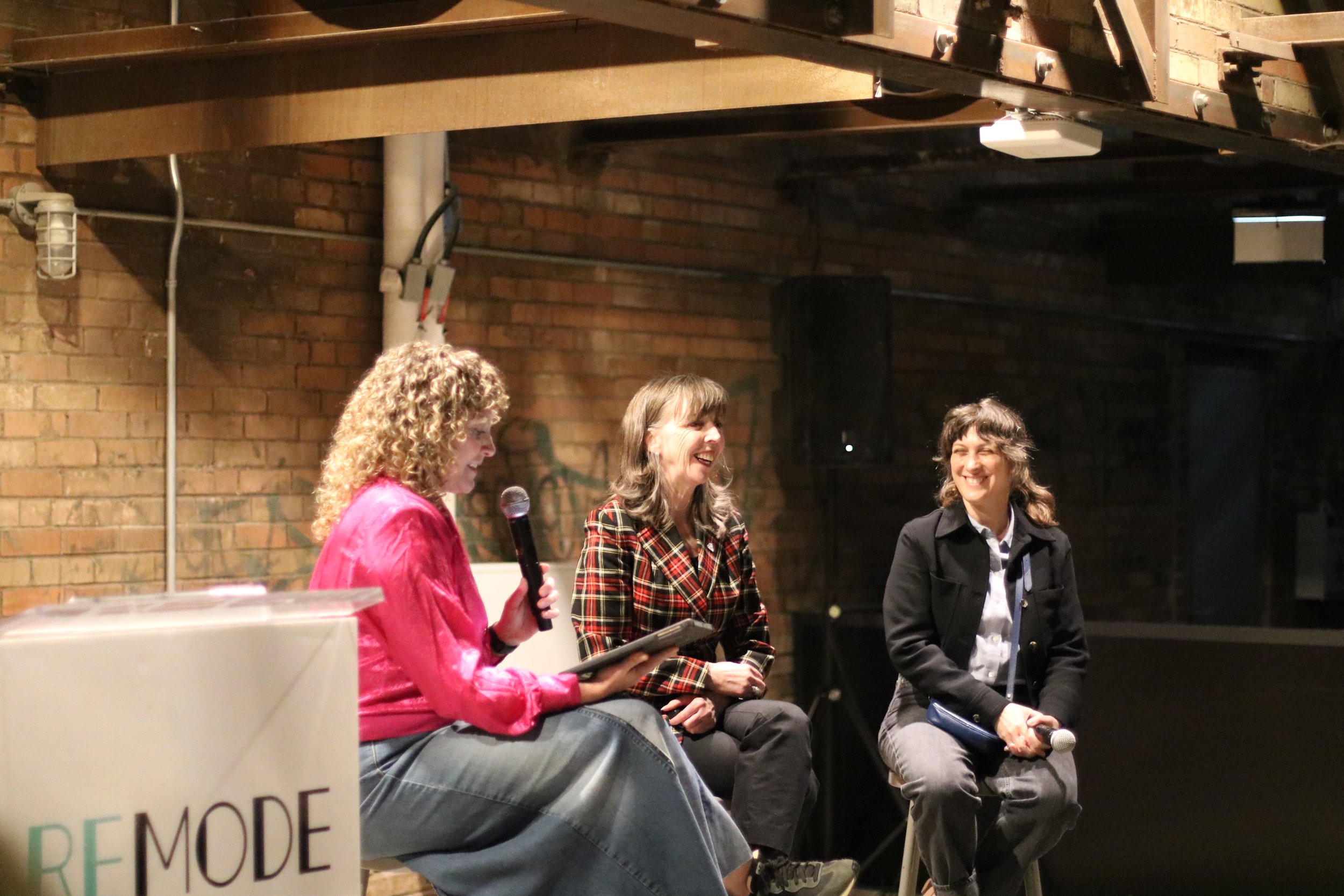
From left to right: Kelly Drennan, MPP Mary-Margaret McMahon, and Myrtile Remond-Bernon during the ‘From Closet to Community: How to Lead Local Textile Action’ talk. Photo Credit: Asha Swann
If Canada were to create a substantive policy on dealing with textile waste, it may help keep clothing and fabrics out of the landfill.
As of January 2026, the City of Toronto is no longer handling residential recycling. A private, not-for-profit provider, Circular Materials, is responsible for handling recycling collection, a move as part of the province’s larger switch to Extended Producer Responsibility (EPR).
In a typical scenario, recycling is the city’s problem. Through taxes, the residents of the city pay for the service. This can create consistency issues between a larger region with more money to spend on recycling compared to a rural area where curbside collection isn’t supported. But EPR aims to change that: representing a legislation that essentially forces companies to pay additional fees if their product is made from non-recyclable materials. It also means companies become financially responsible for the disposal and end-of-life care of the product. When correctly implemented, EPR shifts the burden away from taxpayers and supports a circular economy. But there is a gap when it comes to textiles. Despite Toronto implementing EPR, textiles are still described as ‘contamination’ to curbside recycling, according to Circular Materials CEO Allen Langdon.
In a written statement to Rebelle Zine, Langdon said, “With that in mind, clothing and textiles are not included as designated materials in the Blue Box Regulation. As a result, this material is outside of Circular Materials’ scope and we do not have any initiatives related to clothing and textiles.”
The statement then continued: “Clothing and textiles are not included in the Blue Box recycling program and therefore should not be included in a resident’s curbside recycling bins, as it is considered contamination.”
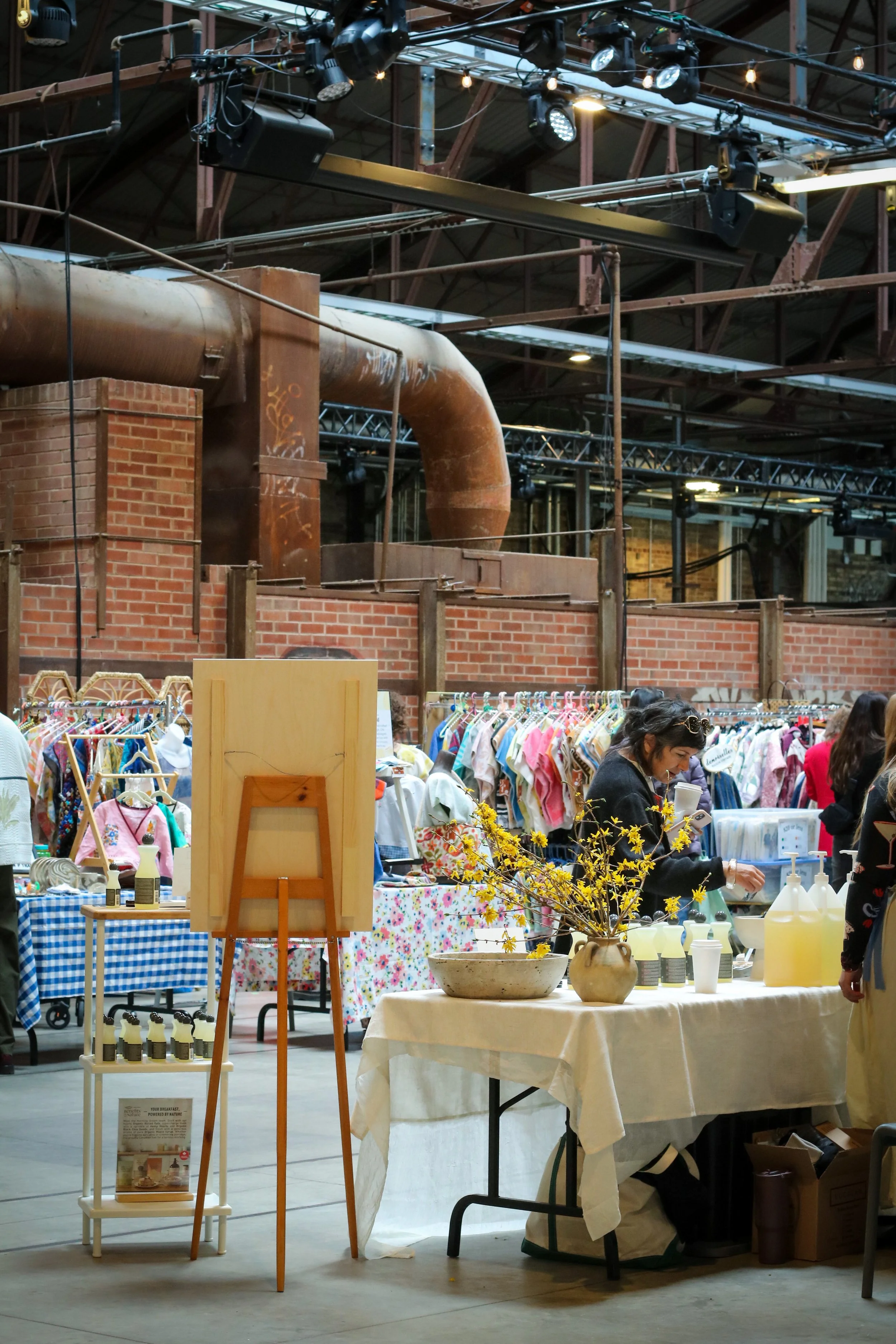
Visitors look at what vendors sell at the ReMode Circular Fashion event. Photo Credit: Asha Swann
A sign for Fashion Takes Action, the organizers of the ReMode Circular Fashion event. Photo Credit: Asha Swann
Because there are no current policies in place to deal with textile waste and recycling, the onus falls on the consumer to focus on what Fashion Takes Action describes as the 7 Rs of sustainability: reduce, reuse, repair, resell, repurpose, rent, and recycle.
ReMode was only one day, but Drennan urges education as a long-lasting tool.
“It's about removing barriers. And how do we do that? We do that through education. Because once you know something, you can't unknow it, right?” she says. “Once you see something, you can't unsee it.”
She also gives an important reminder: textiles aren’t the only factor at risk. It’s climate change as a whole, but the conversation starts with education.
“Fashion, it intersects with so many other industries, and we can talk about these big, broader climate issues – like deforestation, plastic pollution, human rights issues,” she says. “Consumer behaviour is really key.”